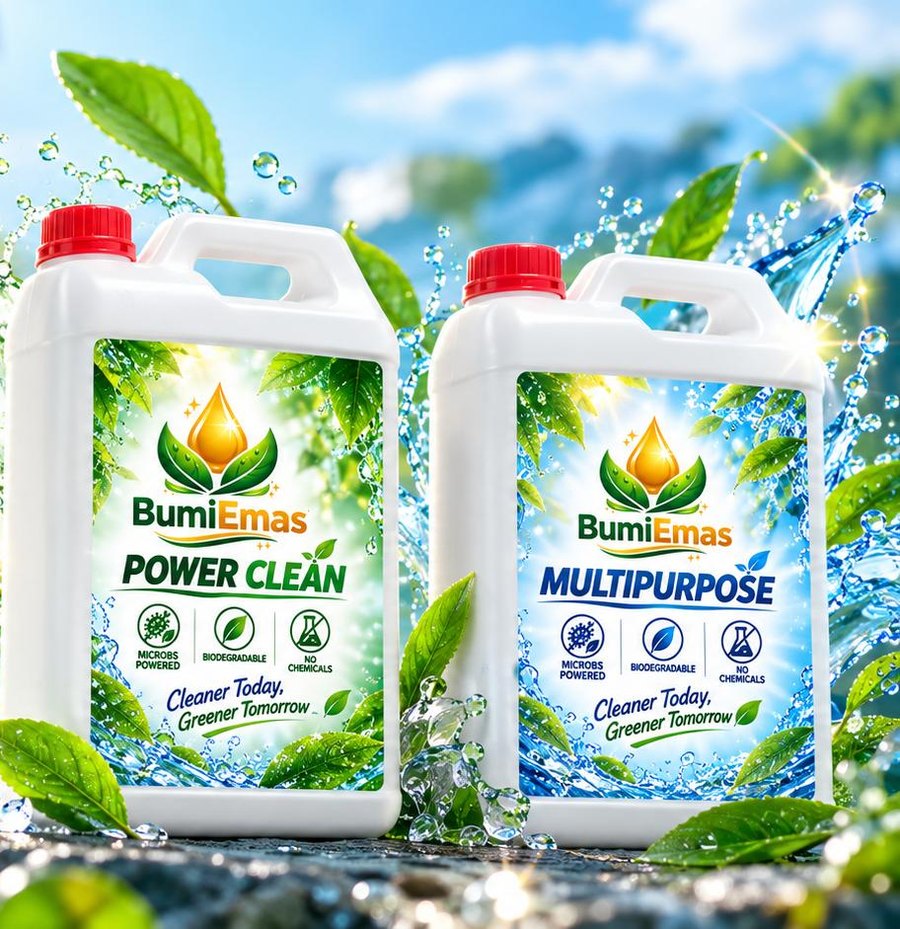
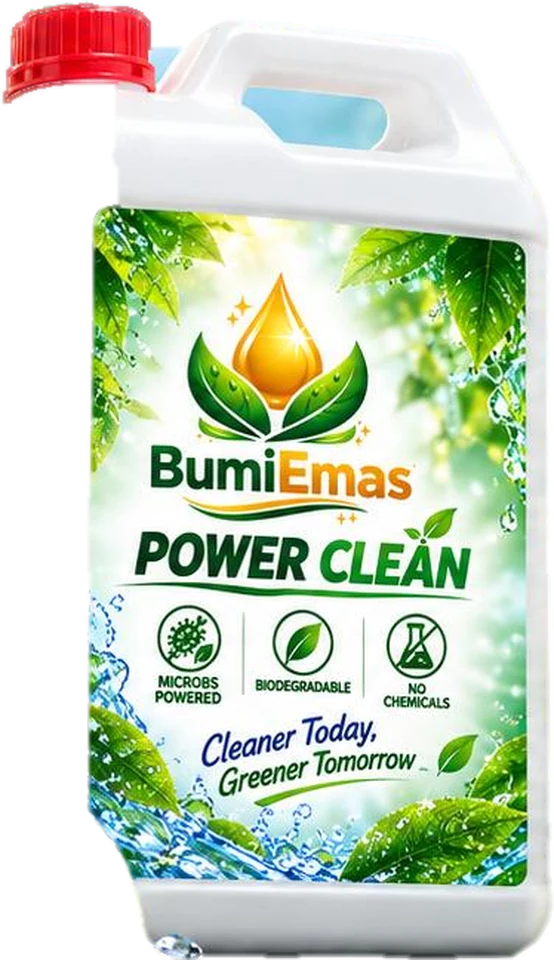
Power Clean
Toilet bowls, urinals and washroom drains
Digests uric acid in the bowl and in the trap below it, so odour is removed rather than covered.
Cleaner Today, Greener Tomorrow
Bumi Emas uses live microbes to digest the urine, grease and organic waste that odour actually comes from. They keep working in your drains and on your surfaces long after the trolley has moved on.
Four things facility, hospitality and F&B teams live with every week.
The uric acid in the bowl, the grout and the trap below was never removed, so the smell has something to come back from.
Bleach and acid mean gloves, segregated storage and a handling briefing for each person who joins the team.
Whatever you pour away ends up in the septic tank, the sewer and eventually the waterway.
Owners and tenants increasingly want an answer about cleaning chemicals that they can put into a report.
Conventional cleaning is an event. This is a process that carries on between cleans.
Spray, mop or pour exactly as your team does now. Nothing about the routine changes.
The microbes feed on grease, urine and organic soil, breaking it down rather than moving it somewhere else.
They stay on surfaces and in drains, controlling odour long after cleaning ends.
Still working, hours after the trolley has moved on.
Fewer products on the trolley, less for staff to get wrong. Both come in 5 litre and 20 litre containers.
Toilet bowls, urinals and washroom drains
Digests uric acid in the bowl and in the trap below it, so odour is removed rather than covered.
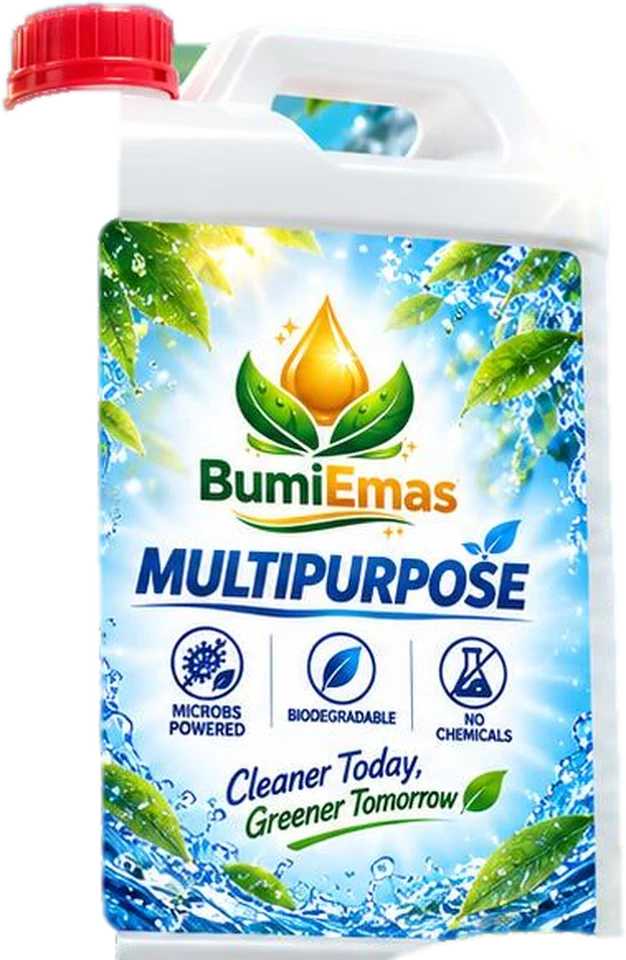
Floors, kitchens, tiles, walls and glass
One product for every washable surface. Non-corrosive and gentle on skin, with a citrus scent from lemon, lemongrass and neem.
Two products cover most of a site. Pick an area to see which one to use and how to dose it.
Toilet bowls, urinals and washroom drains
Uric acid is what makes a washroom smell by midday, and fragrance only covers it. The microbes digest it in the bowl and in the trap below, so the smell has nothing to come back from.
Dilute 1–2 capfuls in a bucket of water. No need to rinse on most surfaces.
Floors, worktops, tiles and walls
Kitchen grease is organic, which is exactly what these microbes feed on. Rather than lifting grease and pushing it down the drain, they break it down where it sits.
Dilute 1–2 capfuls in a bucket of water, more for heavy soil.
Hard floors, glass and painted walls
One product across every washable surface, so trolleys carry less and staff have fewer things to get wrong. Lemon, lemongrass and neem extracts leave a citrus scent rather than a chemical one.
Dilute 1–2 capfuls in a bucket of water. Non-corrosive and gentle on skin, so no gloves.
Floor drains and washroom waste lines
Drains are where organic waste collects and where odour is generated between cleans. The microbes stay in the line and keep digesting, and the discharge is safe for sewers and septic tanks.
Pour directly into the drain. Safe for surfaces, drains and septic systems.
Not marketing language. These are the findings recorded in the safety data sheets for both products.
Every engagement starts with an on-site assessment and a demo on your own worst areas. After that we set the dosing, train your cleaners on it, come back to check it is working, and hand you usage records you can put straight into ESG reporting.
We come to your site, test both products on the areas that give you the most trouble, and you see the result before you commit to anything.